
Skin Cancer Wound Repair in Manly
If you are having a skin cancer or suspicious skin lesion removed, an important consideration is how the wound will be managed and repaired afterwards. Appropriate skin cancer wound repair in Manly involves careful assessment of the lesion, the surrounding skin and the most suitable approach to treatment.
At South Steyne Medical Centre, doctors consulting at our Manly Skin Cancer Clinic provide skin cancer assessments and can advise patients about appropriate treatment options, wound management and specialist referral where necessary.
Many patients are understandably concerned about scarring, healing and cosmetic outcomes, particularly when a skin cancer is located on the face, scalp, neck or another visible area.
What Is Skin Cancer Wound Repair?
Skin cancer wound repair refers to the management and closure of the wound following the removal of a skin cancer or suspicious skin lesion.
The approach depends on several factors, including:
- The size and type of lesion
- Its location on the body
- The amount of tissue requiring removal
- The condition and elasticity of the surrounding skin
- The patient’s general health and healing factors
- Cosmetic and functional considerations
- Whether specialist treatment is required
Some wounds can be closed using standard stitches, while others require more complex techniques or specialist management.
The primary objective is to ensure appropriate treatment while supporting healing and reducing the risk of complications.
What Is a Flap Repair?
A flap repair is an advanced wound closure technique sometimes used following skin cancer removal.
It involves moving nearby skin and underlying tissue into the area where a lesion has been removed. This can help close wounds that may be difficult to manage using standard sutures alone.
Flap repairs may be considered when:
- The wound is relatively large
- The surrounding skin has limited movement
- A simple closure could cause excessive tension
- The wound is close to important facial structures
- Functional or cosmetic considerations require a different approach
Not every skin cancer removal requires a flap repair. Many wounds can be closed using conventional suturing techniques.
Complex wound repairs, including flap reconstruction, may require referral to a dermatologist, plastic surgeon or another appropriately qualified specialist.
Skin Cancer Assessment and Treatment in Manly
South Steyne Medical Centre provides access to doctors with interests in skin cancer medicine through its dedicated Manly Skin Cancer Clinic.
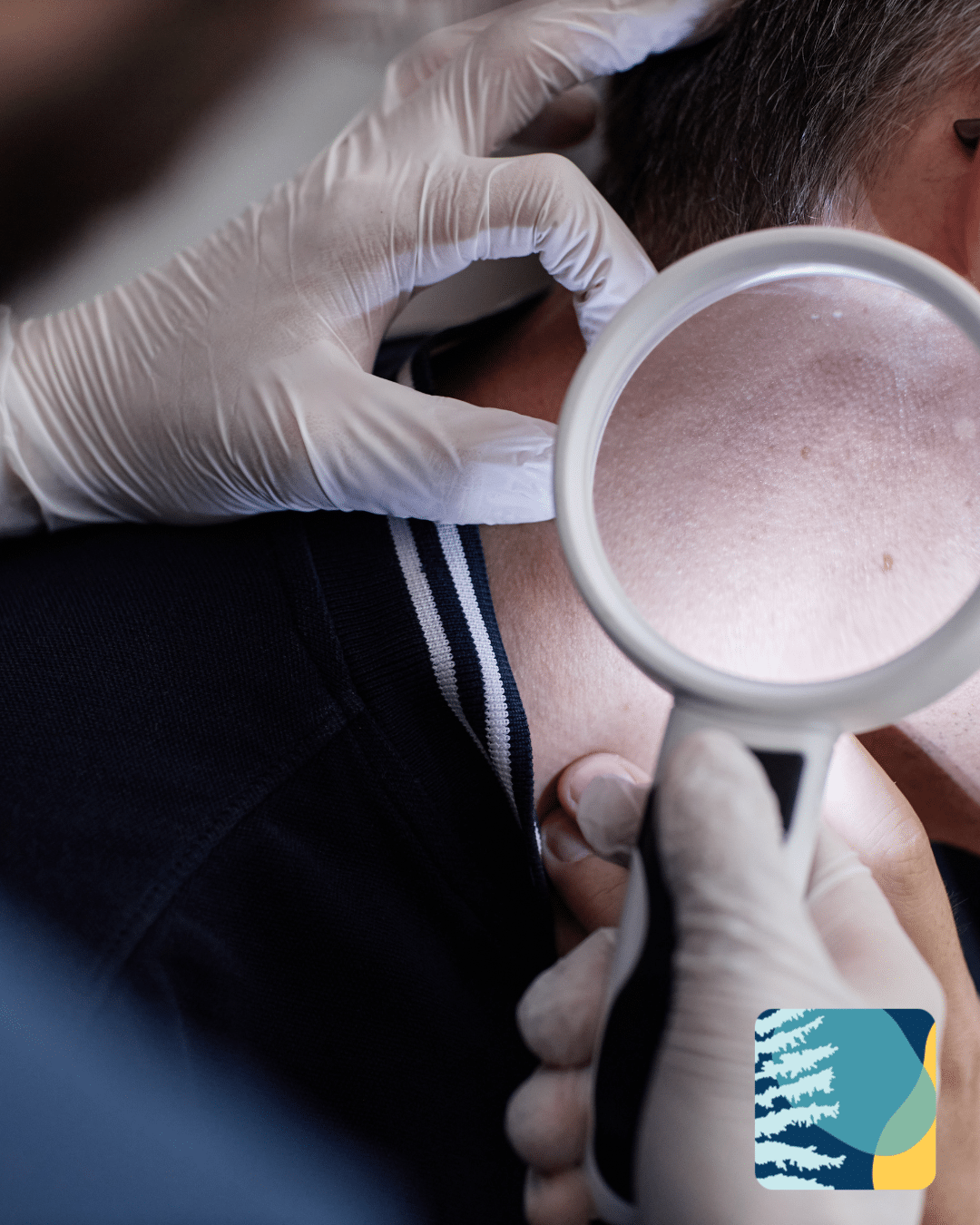
Depending on the nature of the lesion and the services available, an assessment may involve:
- Examination of suspicious skin lesions
- Dermoscopic assessment
- Discussion of appropriate treatment options
- Consideration of whether a biopsy or excision is required
- Assessment of wound healing and scarring considerations
- Referral for specialist surgical treatment where appropriate
The most suitable treatment depends on the type of skin lesion, its location, the patient’s medical history and the clinical findings.
Learn more about our Manly Skin Cancer Clinic.
Why Wound Repair Matters After Skin Cancer Removal
Removing a skin cancer is only one component of treatment. The way the wound is managed afterwards can influence healing, discomfort, infection risk and the appearance of the resulting scar.
Wound repair considerations are particularly important for lesions involving:
- Face
- Nose
- Cheeks
- Forehead
- Scalp
- Ears
- Neck
- Upper chest
- Hands
While any surgical procedure involving the skin can result in scarring, appropriate planning, wound care and follow-up can help support healing.
Patients should also be aware that healing outcomes differ between individuals and depend on several factors, including age, skin type, wound location and underlying medical conditions.
Facial Skin Cancer Wound Repair
Skin cancer surgery involving the face requires particular attention because of the area’s complex anatomy and its cosmetic and functional importance.
A clinician assessing a facial skin cancer may consider:
- The size and location of the lesion
- The proximity of the eyes, nose, lips or ears
- Skin tension and natural facial movement
- The anticipated size of the wound
- Potential scarring
- The need for specialist surgical management
Some facial skin cancers can be managed in general practice, depending on the complexity of the lesion and the treating doctor’s scope of practice.
More complex cases may require referral to a dermatologist, plastic surgeon or another specialist.
When Might Specialist Referral Be Recommended?
Not all skin cancers or wounds are suitable for management within a general practice setting.
Specialist referral may be recommended when:
- A lesion is large or clinically complex
- The skin cancer is located in a high-risk anatomical area
- There is concern about aggressive or recurrent skin cancer
- The wound may require advanced reconstruction
- The diagnosis or appropriate treatment is uncertain
- Specialist assessment would provide a safer or more appropriate treatment pathway
The aim is to ensure that patients receive care appropriate to their individual clinical circumstances.
Skin Cancer Checks at South Steyne Medical Centre
South Steyne Medical Centre is located directly opposite Manly Beach and provides access to skin cancer assessment services for patients across Manly and Sydney’s Northern Beaches.
Doctors consulting at the practice can assess suspicious skin lesions, discuss treatment options and arrange referral where specialist management is indicated.
Regular skin checks may be particularly important for people with significant sun exposure, a personal or family history of skin cancer, or changing or suspicious skin lesions.
For further information, visit our dedicated Skin Cancer Clinic in Manly.
Book a Skin Cancer Assessment in Manly
If you are concerned about a suspicious skin lesion, an existing skin cancer diagnosis or wound healing following a previous procedure, you can arrange an appointment with a doctor consulting at South Steyne Medical Centre.
An initial assessment can help determine the appropriate next steps, including whether further investigation, treatment or specialist referral is required.
View Our Manly Skin Cancer Clinic and Booking Information
For general enquiries, please contact South Steyne Medical Centre.
Frequently Asked Questions
What is skin cancer wound repair?
Skin cancer wound repair involves managing and closing the wound after a skin cancer or suspicious lesion has been surgically removed. The appropriate technique depends on the wound’s size, location and complexity.
What is a flap repair after skin cancer removal?
A flap repair is an advanced surgical technique that uses nearby tissue to close a wound. It may be necessary when standard stitches cannot achieve an appropriate closure or where functional considerations require a different approach.
Do all skin cancer removals require flap repairs?
No. Many skin cancer removals can be closed using standard sutures. Advanced techniques are generally reserved for wounds where simpler approaches are unsuitable.
Can skin cancer wound repair be performed in general practice?
Some skin cancer procedures and wound closures can be performed by appropriately trained GPs. More complex procedures may require specialist treatment. The appropriate setting depends on the lesion and the treating clinician’s expertise.
Will skin cancer wound repair leave a scar?
Any procedure involving an incision in the skin can leave a scar. The appearance of the scar depends on the size and location of the wound, the repair technique and individual healing factors.
Is skin cancer wound repair more complicated on the face?
It can be. The face contains important functional and cosmetic structures, which means some facial wounds require more complex planning or specialist surgical care.
How do I know whether my skin cancer requires specialist surgery?
A doctor can assess the lesion and consider its size, location, clinical appearance and other relevant risk factors. Depending on the findings, further investigation or referral may be recommended.
How long does healing take after skin cancer surgery?
Healing time varies according to the location, depth and size of the wound, the type of procedure and the individual’s general health. Your treating clinician can provide more specific advice based on your circumstances.
Will I need stitches removed?
Some wounds are closed using dissolvable sutures, while others require stitches to be removed at a follow-up appointment. Your treating clinician will explain the appropriate wound care and follow-up requirements.
Where can I book a skin cancer check in Manly?
Patients can find information about available doctors and skin cancer assessment appointments through the South Steyne Medical Centre Skin Cancer Clinic.